
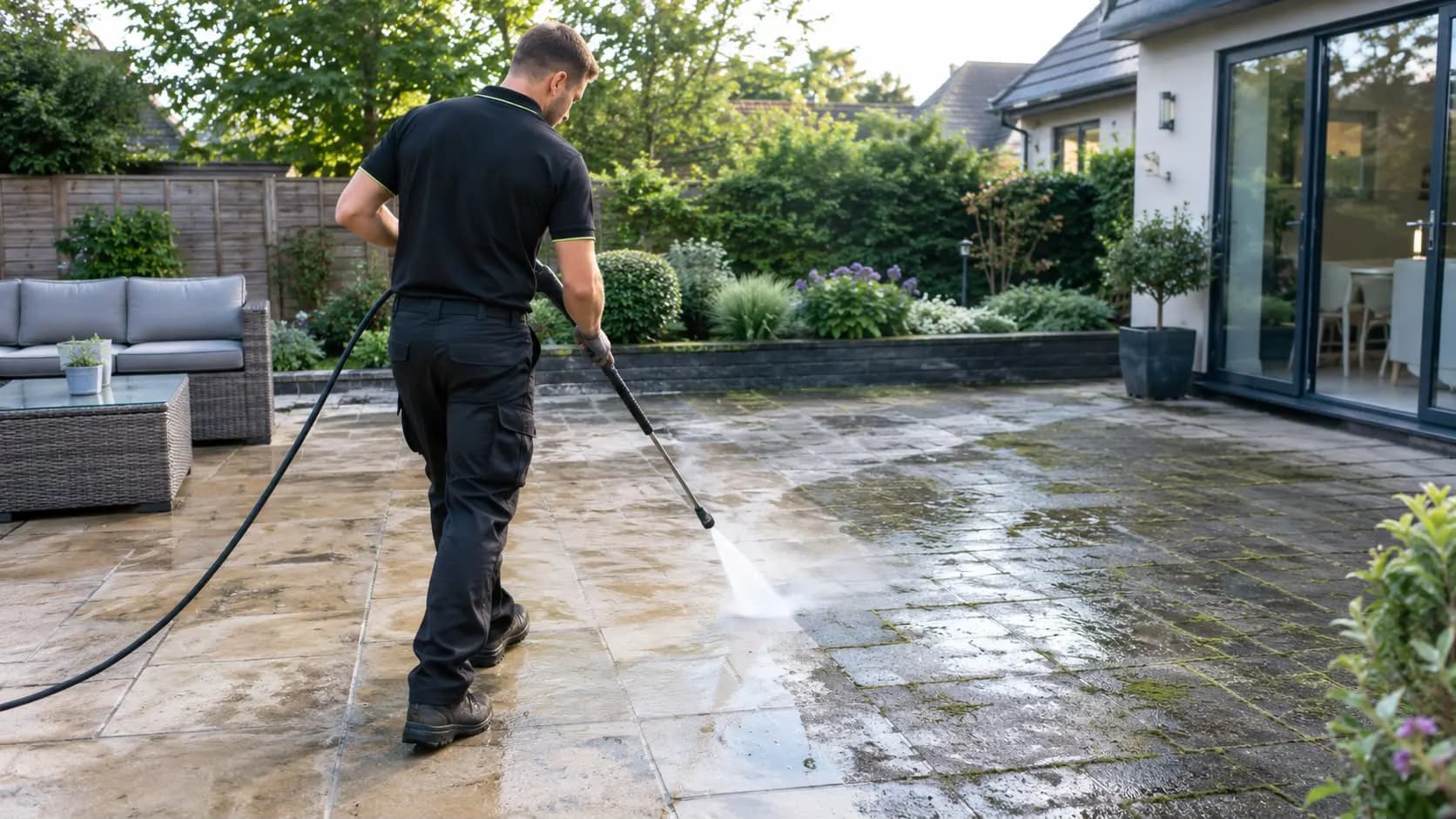
Jet washing across London
The surfacesets thepressure.
Driveways, patios and exteriors, washed at a pressure matched to what they are made of. More is not better: the wrong setting can do lasting damage to the thing you are trying to clean.
- Vetted, uniformed cleaning teams
- £2 million insurance cover
- Covering all of London
Get your free quote
A few quick details, a real price back fast.
- Surfaces
- Paving, stone, porcelain, decking
- Where
- Driveways, patios, exteriors
- Pressure
- Matched to the surface
- The quote
- Free, no obligation
The common mistake
More pressure is not better.
How dirty a surface looks tells you very little about how much pressure it can take.
Jet washing looks like the simplest job in the world: point, squeeze, watch the dirt run off. It is also the easiest cleaning job to get wrong, because the thing that cleans is the same thing that damages. The pressure that suits one surface can erode another.
That is why the surface is the first question, not the last. A patio that is black with growth and a patio that is only dusty might need the same pressure, or very different pressures, depending on what the slabs are made of. The dirt is the task. The material sets the limit.
What the manufacturers say
Paving manufacturers publish care advice because they see the damage. Marshalls, one of the UK's largest, says to sweep first and test a small area, and to use no more than medium pressure on block paving, holding the lance at an angle and at least 200mm away. For natural stone, sandstone and porcelain it advises a low-pressure setting, because high pressure can erode them.
Natural stone, sandstone and porcelain should be washed on a low-pressure setting, because high pressure can erode them.
Block paving has a second trap
The joints between the blocks are filled with sand, and a strong jet can wash it out. Marshalls' advice is that if it goes, the sand is replaced with similar sand, and that this is done before a block-paved drive takes heavy traffic. It is a good question to ask of anyone who offers to wash your drive.
The gauge
Pick a surface. See the ceiling.
- Within the advice
- Beyond the advice
- Pressure
- Medium at most
- Technique
- Sweep first and test a small area. Keep the lance at an angle and at least 200mm from the surface.
- Watch for
- Sand washing out of the joints. If it does, it should be replaced with similar sand, and before the drive takes heavy traffic.
- Pressure
- Low throughout
- Technique
- Use a low-pressure setting, and test a small, out-of-the-way area first.
- Watch for
- High pressure can erode natural stone and sandstone, which is why the advice is a low setting.
- Pressure
- Low throughout
- Technique
- Use a low-pressure setting, and test a small area first.
- Watch for
- High pressure can erode porcelain as well as stone, which is why the advice is a low setting.
- Pressure
- Lowest to start
- Technique
- Start on the lowest setting, with the lance 8 to 12 inches away, a wide fan, and moving along the grain of the boards.
- Watch for
- Too much pressure, too close, or working across the boards instead of along them is what the advice steers you away from.
Built from published advice by Marshalls, a paving manufacturer. Your surface and its condition may need something different, so tell us what you have.
The point of it
A good wash takes off the dirt and leaves the surface alone.
That is the whole brief: clean, with nothing lost.
Before you book
What jet washing can't fix.
A wash is cleaning. Some problems are not dirt.
A surface can look bad for reasons that have nothing to do with how clean it is. Jet washing answers one of them, and it helps to know which.
What it does well
It removes surface dirt: algae, moss, mud, weathering and general grime. On a surface in sound condition, that often changes how a patio or drive looks.
What it doesn't
- Worn or eroded surfaces. Washing removes dirt, not the surface itself. If the top layer has worn away, it will look cleaner, not new.
- Cracked or loose paving. Washing does not repair these. Tell us where they are, so the pressure and the quote allow for them.
- Set-in stains. Oil, rust and deep stains may lift only partly, and no cleaner can honestly promise otherwise.
If you are replacing a front garden surface
A related rule is worth knowing. In England, laying more than 5 square metres of impermeable surface on a front garden needs planning permission, unless the surface is permeable or the water drains to a lawn or border. It applies to houses, and a council can remove the right for an area. If a wash shows that a surface has reached the end of its life, that is the rule that applies to replacing it.
This is general information, so check the Planning Portal or your council for your own property.
Your part
A short list that makes the wash safer.
What makes the quote accurate.
- The surface. What it is made of. It sets the pressure, so it is the most useful thing you can tell us.
- The size. Roughly how big the area is, and whether it is one patch or several.
- The condition. Anything loose, cracked or worn, and any stains that worry you.
How it works
From the quote to a clean surface.
Tell us about the surface
Postcode, roughly how big the area is, and what it is made of. A photo in the notes is better than a description.
Get your price
A real price back, with no obligation. The quote spells out which areas are included.
Pick your day
A dry window suits the surface and the job. We confirm the date, the details and the team.
Wash, then rinse
A vetted, uniformed team works across the surface at a pressure matched to it, testing a small area first.
Also from ReadySpace
Outside is one part of the property.
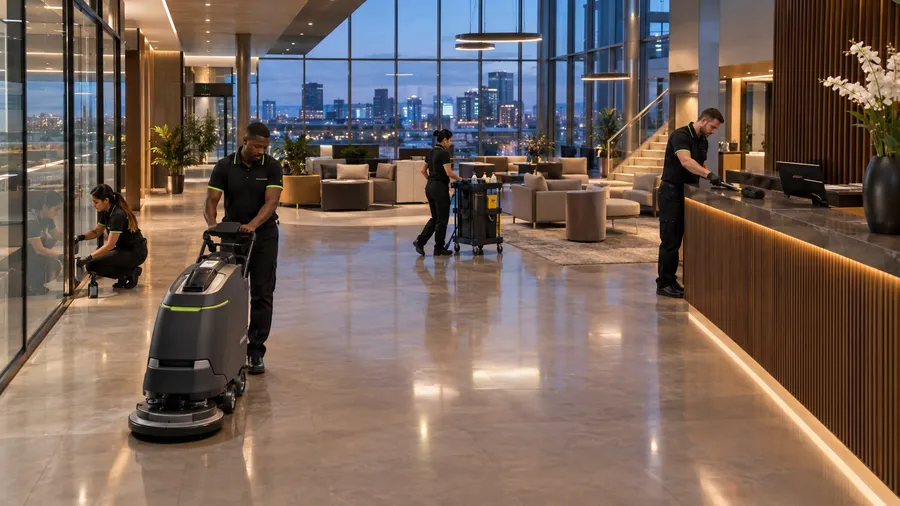
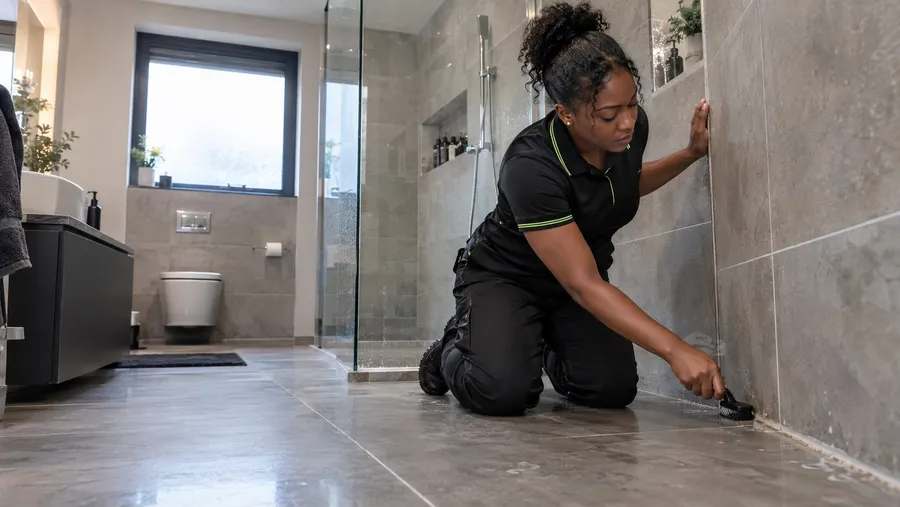
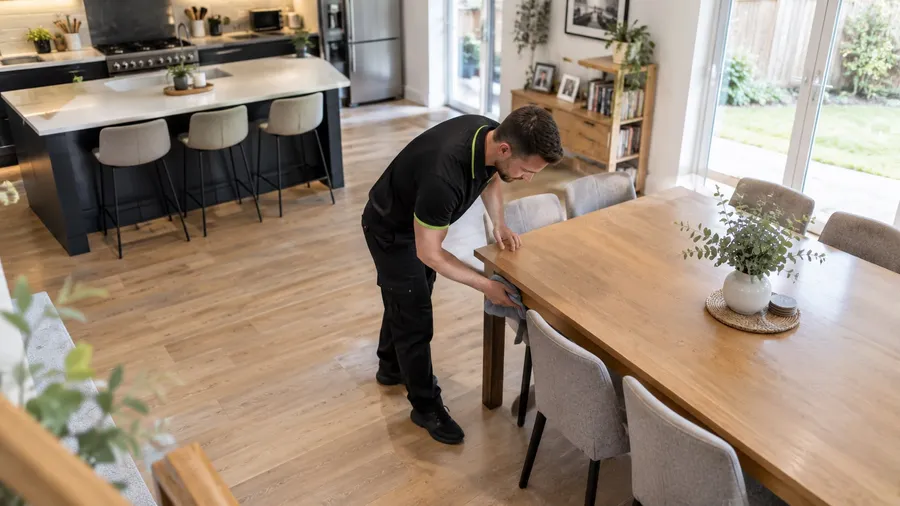
A clean exterior goes well with a clean interior. These are the services that most often sit alongside jet washing.
Questions
Jet washing questions, answered.
Can't see yours here? Call us or use the quote form and we'll come back to you.
Driveways, patios and exteriors. Tell us the surface and roughly how big the area is in the quote form, and we'll say what we can do.
It can, if the pressure is wrong for the surface. Marshalls, a paving manufacturer, advises no more than medium pressure on block paving, and a low-pressure setting on natural stone, sandstone and porcelain because high pressure can erode them. That is why the first thing we ask is what the surface is.
It can be. Marshalls advises that if sand is washed out of the joints it is replaced with similar sand, and before a block-paved drive takes heavy traffic. Tell us if your paving has been re-sanded recently or has loose areas.
Tell us about it in the quote notes. Marshalls' advice for decking is to start on the lowest setting, hold the lance 8 to 12 inches away, use a wide fan and work along the grain of the boards. Decking needs more care than most surfaces.
Clear the area of anything movable, and tell us in the quote notes what the surface is, whether anything is loose or cracked, and what access there is to an outside tap and power. The quote will say what else is needed.
In England, laying more than 5 square metres of impermeable surface on a front garden needs planning permission, unless the surface is permeable or the water drains to a lawn or border. That applies to houses, and a council can remove the right for an area. This is general information, so check the Planning Portal or your council for your own property.
Fill in the quote form with your postcode, roughly how big the area is and what the surface is. We come back with a real price, with no obligation.
Every London borough, and the City of London. Add your postcode to the quote form and we'll confirm.
Ready when you are
Ready for surfaces that look cared for?
Tell us what the surface is and roughly how big it is. A real price back, no obligation.
- Vetted, uniformed cleaning teams
- £2 million insurance cover
- Covering all of London
Get your free quote
Four quick details. A real answer, fast.